
Neuroaffirming Autism & ADHD
Diagnostic Assessments
Comprehensive, evidence-based Autism and ADHD assessments for adults, delivered by an experienced clinical psychologist.
Available Australia-wide via telehealth.

You’re welcome here.
Seeking an assessment as an adult can feel like a big step. However you've arrived here, be that after years of wondering or a more recent realisation or curiosity, Minds Matter is here as a safe space to explore your experiences.
Assessments at Minds Matter are collaborative, affirming, and tailored to suit you. Whether you're after clarity, self-understanding, or access to the right support, you'll be listened to without judgement.

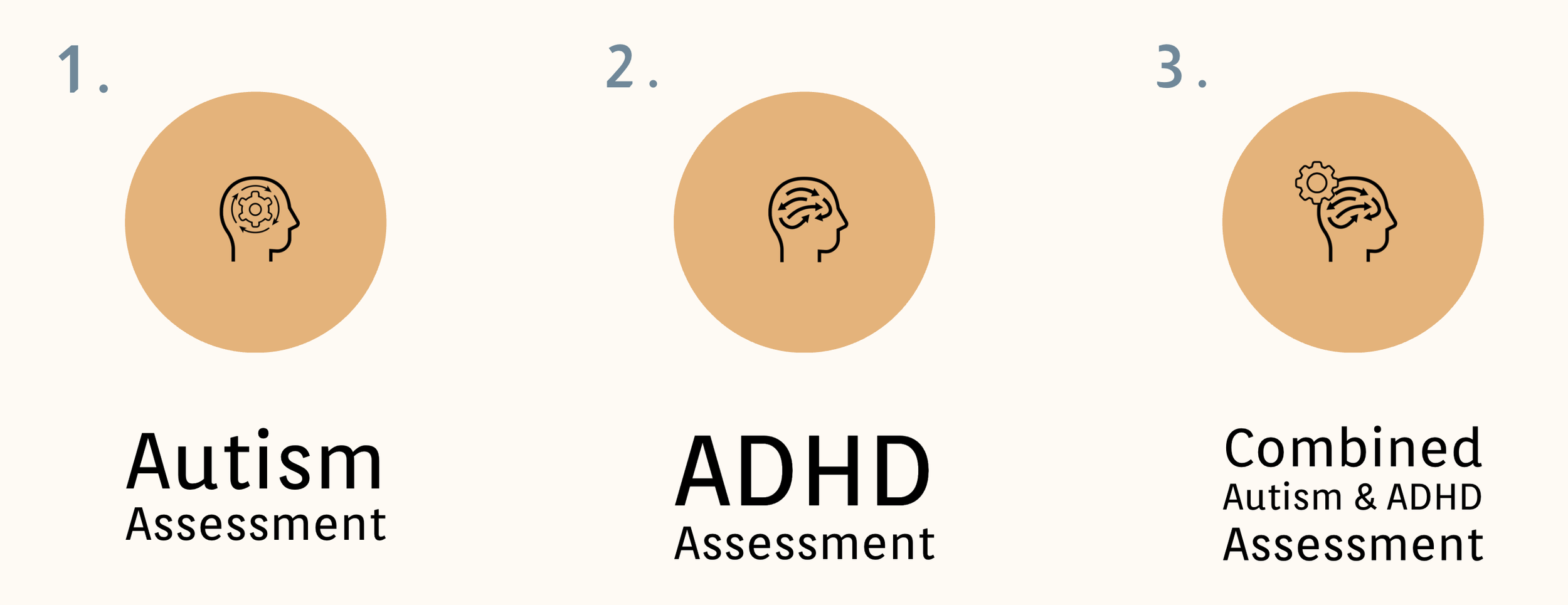
Assessment Options
Why Minds Matter?
Affirming, down-to-earth, neurodivergent psychology.
Minds Matter is a neurodivergent-led psychology practice dedicated to supporting neurodivergent people, and those curious about understanding how their brain works.
Founded by Clinical Psychologist Emily Lovell, Minds Matter brings together Emily's lived neurodivergent experience and professional expertise to provide neuroaffirming, trauma-aware assessments for adults of all ages.
Emily recognises that neurodivergence can present in many different ways and is often overlooked or misunderstood, particularly among people from marginalised communities. Minds Matter is committed to providing a warm, inclusive, and non-judgemental space for people from all backgrounds and life experiences.
Emily's approach is collaborative, compassionate, and grounded in curiosity. Every assessment is designed for clients to leave with a deeper understanding of themselves, and clear, practical recommendations to support their next steps.

Emily Lovell
Clinical Psychologist
BPsych(Hons), MPsych(Clin)
You might recognise yourself here
There is no single way to be neurodivergent. Many adults arrive here after years of feeling different or overwhelmed, without having the language to understand why.
People often seek an assessment because they:
Have spent much of their life feeling different, but haven't had the words to explain why
Have often been told they are "too sensitive”, "too much”, or that they are "not living up to their potential"
Have learned to hide parts of themselves, copy what others do, or work hard to appear like everything is fine, even when it feels exhausting
Find social situations tiring, confusing, or like they require a lot of effort and preparation
Experience the world intensely, including sounds, lights, textures, emotions, or physical sensations
Notice that their attention works differently, with some things feeling almost impossible to start and others capturing their attention completely
Find everyday things like planning, organising, remembering tasks, or managing routines take more effort than other people seem to realise
Have experienced burnout, overwhelm, or periods where they have pushed themselves until they can no longer keep going
Have started wondering about their own experiences after someone close to them was identified as Autistic or ADHD
Are simply curious to understand themselves, their strengths, and the way their brain works more deeply
An assessment is an opportunity to better understand your brain, your experiences, and the supports that may help you thrive. You don't need to have all the answers before you begin.

Frequently Asked Questions
-
Minds Matter sees adults (18 years and over) anywhere in Australia via telehealth.
In some circumstances, we may also provide assessments for young people aged 16 years and over. If you are enquiring about an assessment for someone under 18, please get in touch so we can discuss whether our services are likely to be a good fit.
-
A referral from a health professional is not required to access assessment services at Minds Matter. You are welcome to self-refer at any time via the contact page.
Referrals from GPs, allied health professionals, psychiatrists, and other support services are also welcome. While not essential, they can be helpful, particularly if you have a clinician who knows you well and can provide relevant background information or a clinical handover to inform your assessment.
Minds Matter values collaborative, client-centred care and welcomes communication with your existing supports where you provide consent.
Health professionals wishing to make a referral are invited to do so via the contact page.
-
Fee structures vary by assessment type. Please refer to the assessment page for current pricing.
Minds Matter is not a bulk billing service, and Medicare rebates are not currently available for assessment services. Depending on your circumstances, funding may be available through other schemes, such as the NDIS, WorkSafe/WorkCover, or other third-party funders. Eligibility and funding arrangements vary, so please speak with your funding body directly to confirm.
You may also be eligible for a rebate through your private health insurance. Please check directly with your insurer, as cover varies between policies.
-
All sessions run via encrypted telehealth video conferencing. You will require access to a private, safe space with a computer or iPad/tablet (or smartphone, however, this can be limiting) and reliable internet connection. Clients are sent an email with the videolink to be used ahead of the appointment time.
-
After your initial enquiry, you will receive information about the next available appointment times and the steps involved.
General wait times for assessment appointments vary depending on availability at the time of your enquiry, but are typically around 3–6 weeks.
Once your assessment appointment has been scheduled, you will receive your pre-assessment forms to complete beforehand. Some people prefer to complete these in one sitting, while others find it more helpful to spread them out over a couple of weeks. We simply ask that these are completed a few days prior to your appointment, so your assessor has sufficient time to review the information before your session.
The assessment session itself is completed via telehealth (video call) and typically takes around 3 hours. You are welcome to request breaks whenever you need them. We recommend setting aside approximately 4 hours in your schedule to allow for flexibility, although some assessments may be completed in closer to 2 hours depending on the information being discussed.
Following your assessment session, reports are generally provided within 3–4 weeks. In some cases, this timeframe may be extended if further information or additional clinical review is necessary to ensure the assessment is thorough and accurate.
-
Please see 'cancellation and attendance policy'
-
Yes. Where the criteria are met, you'll receive a formal diagnosis made by a Clinical Psychologist against current DSM-5-TR criteria, along with a written report or letter documenting it.
Clinical Psychologists complete additional postgraduate training in psychological assessment, diagnosis, and the understanding of complex mental health and neurodevelopmental presentations. This specialised training supports thorough, evidence-based assessments that consider both strengths and challenges, as well as alternative explanations for a person's experiences.
For Autism, a diagnosis from a Clinical Psychologist does not require confirmation by another clinician for NDIS access purposes. The NDIS accepts single clinician diagnoses made by a Clinical Psychologist, Psychiatrist, or Paediatrician.
-
Your experiences remain real and valid, regardless of the diagnostic outcome, and the assessment process can still be a valuable and clarifying experience.
The purpose of a comprehensive assessment is not simply to determine whether you do or don't meet the criteria for Autism or ADHD, but to develop an accurate understanding of what may be contributing to your experiences.
Many different factors can influence attention, executive functioning, sensory processing, emotional regulation, and social communication. For example, trauma, anxiety, OCD, burnout, hormonal changes, sleep difficulties, chronic illness, and other mental health or neurodevelopmental conditions can overlap with, mimic, or occur alongside Autism and ADHD. Clinical Psychologists receive advanced postgraduate training in psychological assessment, diagnosis, and differential diagnosis, making them highly skilled in distinguishing between these overlapping presentations. Exploring these possibilities, and understanding how different factors may interact with one another, is an essential part of a comprehensive assessment.
If the diagnostic criteria are not met, you'll still receive your comprehensive report (or confirmation letter), including a clear explanation of the assessment findings, the clinical reasoning behind the decision, and any alternative explanations that may better account for your experiences. You'll also receive personalised recommendations to help guide your next steps.
-
The NDIS considers evidence of how your disability affects your everyday functioning, not just whether you have a diagnosis. To provide the documentation commonly required for an access request, Minds Matter offers an optional NDIS Access Package, which includes:
A Functional Capacity Assessment (formal evidence of how your disability affects your everyday functioning).
A Funding Justification Document (an additional two-page report that complements your assessment report). It synthesises the evidence most relevant to an NDIS access request, clearly outlining your functional impairment, support needs, and how your disability affects your everyday life, in line with the NDIS access criteria.
Completion of the treating clinician section of your NDIS Access Request Form
You don't need to decide straight away. You can request this when booking your assessment, or choose to add it after your assessment has been completed.
Please note: While Minds Matter takes great care to prepare comprehensive, evidence-based reports that meet high clinical, professional, and ethical standards, the National Disability Insurance Agency (NDIA) is solely responsible for deciding whether an applicant meets the access criteria. For this reason, we cannot guarantee the outcome of an application.You can read more about applying for the NDIS here
-
No. Clinical psychologists do not prescribe medication, but can provide a detailed report to support medication discussions with your doctor or psychiatrist.
If you are interested in or looking to start medication, you should seek a referral to a psychiatrist via your GP.
-
We know that navigating the assessment process can feel overwhelming, and we're always happy to answer your questions without judgement. No question is too small, too complicated, or too "silly".
Please reach out and we will respond as soon as we can.
If you would prefer to talk things through, we can also arrange a free 10-minute phone call before you book an assessment. Our goal is to help you feel informed, comfortable, and confident in deciding whether Minds Matter is the right fit for you.
Still have questions?
Feel free to reach out!